
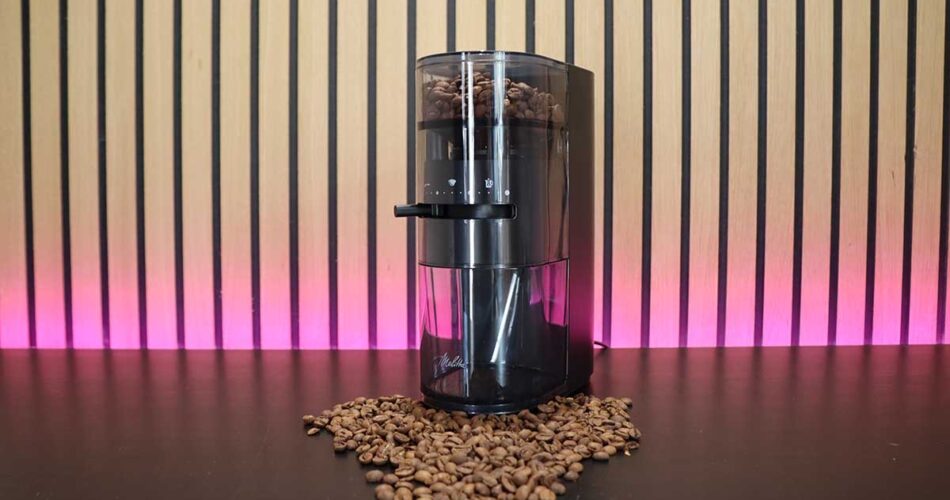
I’ve tried a few Melitta coffee machines over the years, including their bean-to-cup machines, plus their Calibra coffee grinder, and all of which seem to perform well and have an appealing price tag. So when Melitta mentioned their new grinder, the Linea, I was keen to take a look.
Why? Well, it’s price, and it’s spec. It’s got 13 different grind settings, it can grind enough coffee for between one and ten cups, you’ve got three different coffee strengths, and there are a few other clever bits built into it too.
Inside the box, we’ve got the grinder itself. We’ve got the bean hopper, which sits on the top, with the coffee container that sits underneath the grinder. There’s also the usual paperwork and instructions, plus a cleaning brush within the box.
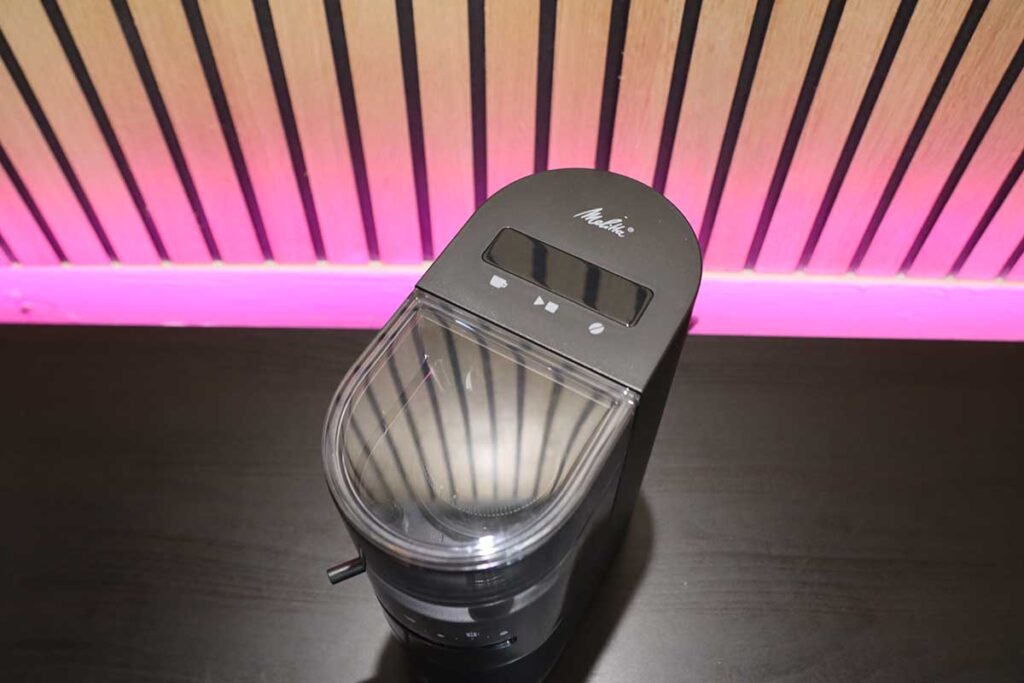
There’s not really anything to set up here; ensure the container is in place, plug it in and you’re ready to go. Which, to be honest, is exactly what I want from something like this.
The Linea itself is quite a nice-looking little grinder, and it is little. It’s far smaller than my current Sage Smart Grinder Pro and takes up barely any space on your kitchen counter. Dare I say portable, easy to take away with you, or to the office?
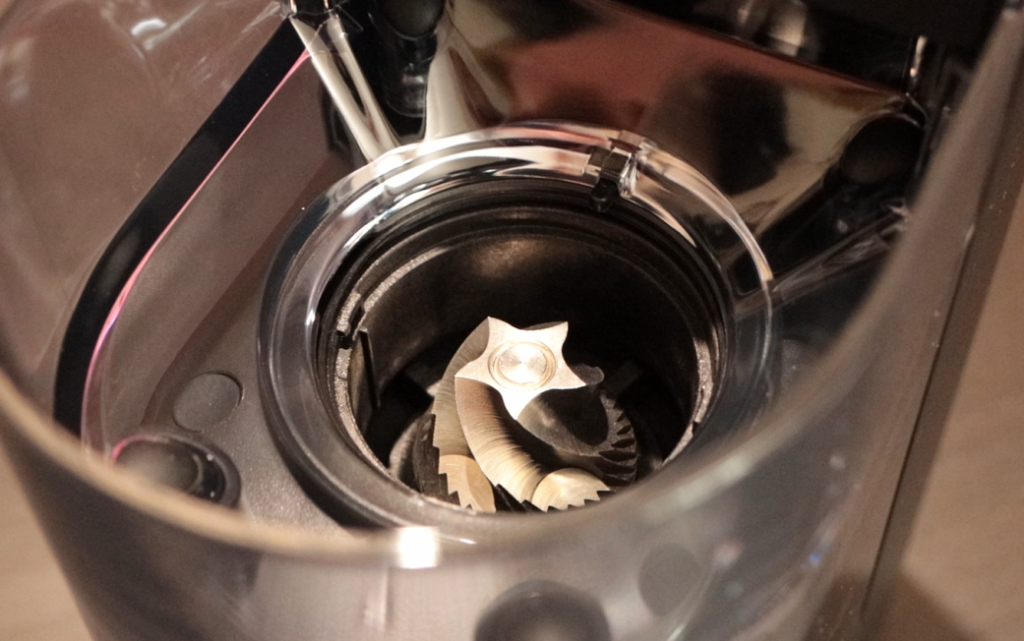
It’s predominantly black, with a fairly simple design. On the top is the bean hopper. This holds up to 100 grams of coffee beans, which is plenty for normal domestic use. You’ve then got the actual grinder underneath, and the ground coffee drops down into the container. The grinder is a stainless steel conical burr grinder and it can be removed for cleaning.
To the top of the machine, at the rear, there’s a little LCD display, a couple of touch buttons and the controls for selecting how much coffee you want, how strong you want it and start/stop. Amount in cups, 1 to 10 and strength of 1, 2 or 3. Then, to the front, a slider or lever, where you select the coarseness of the coffee, from espresso through to French press.
So, you’ve got a few different options and variables here that you’ll need to play around with. First, you can choose quantity: how many cups you want, from 1 through to 10. 3 was about right for the quantity for my portafilter, and I went up a couple more for my mokka pot.
You’ve then got three different strength settings, say mild, normal and strong, and the grind setting itself. There are 13 different settings, so you can go from a fairly fine grind, which you’d want for espresso, through to a much coarser grind for something like a French press.
In terms of specs and not already mentioned, It’s also got something called ioniser technology.
Now, when you grind coffee, you can get quite a lot of static electricity, which means coffee grounds can stick to the container, the grinder and pretty much anything else they can find. The ioniser is designed to reduce that static.
And that’s actually quite useful because if you’ve ever used a coffee grinder before, you’ll know that coffee grounds have a habit of ending up absolutely everywhere.
Using the grinder is really straightforward. Put your beans into the hopper, select a grind setting, choose how many cups you want, and set the strength. Press the start button and wait for the grounds to come out. Based on your settings, it can take between 5 and 15 seconds and will automatically stop when done.
If you’re making a French press, you’ll use one of the coarser settings. If making filter coffee, move towards the middle. And if you’re pairing with your espresso machine, go down towards the finer settings.
Those are starting points. Coffee is one of those things where you can change the grind slightly and completely change how the coffee tastes, so you’re probably going to want to experiment with it. It took me several goes to try and dial in a shot, and if you’re really into your coffee, weighing output and brew time, there might not be enough grind settings here for you.
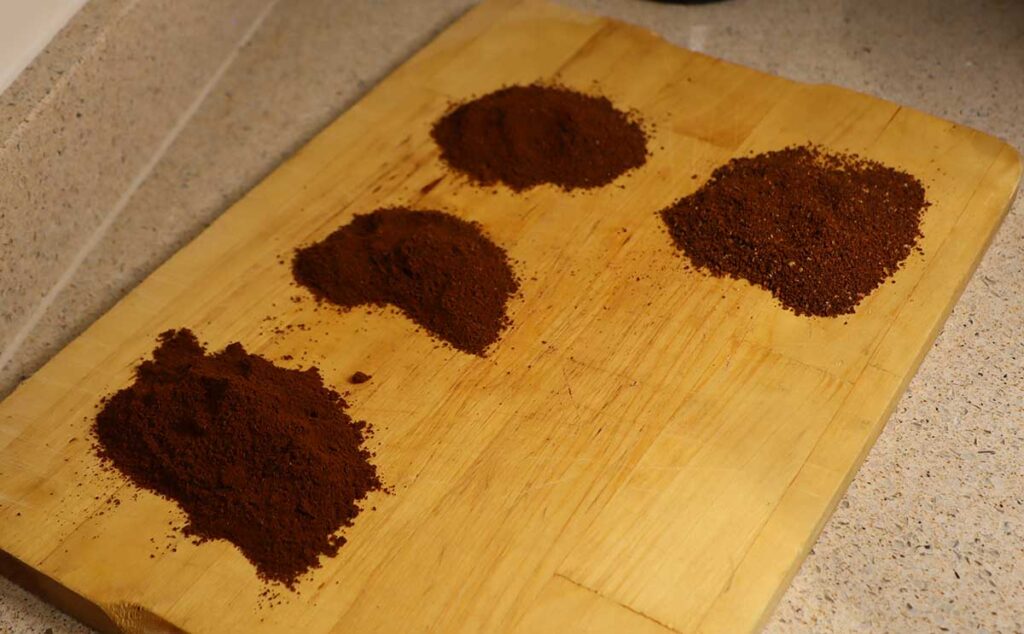
About grind settings, the difference is clear and you can see it as you progress up or down through the settings. At the finer settings, almost flour like in consistency, and as you go up, it becomes more granular, like instant coffee.
In terms of performance, I’ve been pretty impressed with it, all things considered.
It’s quick, it’s very simple to use, it doesn’t seem to make a huge amount of mess, and the amount of coffee it produces is consistent. It’s also fairly quiet, way smaller than my current grinder and half the price. I’ve tried it at various grind settings and with different amounts of coffee, and it does what it’s supposed to do.
So what did my coffee taste like? As you’d expect, the grinder itself isn’t going to magically make bad coffee taste good, how you brew it plays a significant role. I remember pulling espressos before, and while the machine might be great, if the grind is no good, the shot won’t be good.
I like Grind, their a London-based roaster, I think. Beans are fairly fresh, and I’ve been using those to test the machine. I’ve found the Linea gives me enough control to adjust the coffee to how I like it, and to pull a good shot, or create a nice brew for me and my wife with the mokka pot. That being said, and I touched on it earlier, you are limited to 13 settings, so while that is likely more than enough for most people, for others, you may want more options than that.
Overall, I think this is a fantastic entry-to-intermediate coffee grinder. It worked well with my Espresso machine; it’s very small and sleek, which I love, and it’s easy to use. With a retail price of £79.99, I think it offers good value for money. In fact, I’ve seen it slightly cheaper at some retailers, so even better. Die-hard brewers, those that want ti dial in the perfect espresso, this probably won’t give you the flexibility you need, but for everyone else, I think it’ll be great.
For more info and to purchase, head over to the official Melitta Linea webpage.
